Software developer notes
Dead voltage regulator
2020-03-27
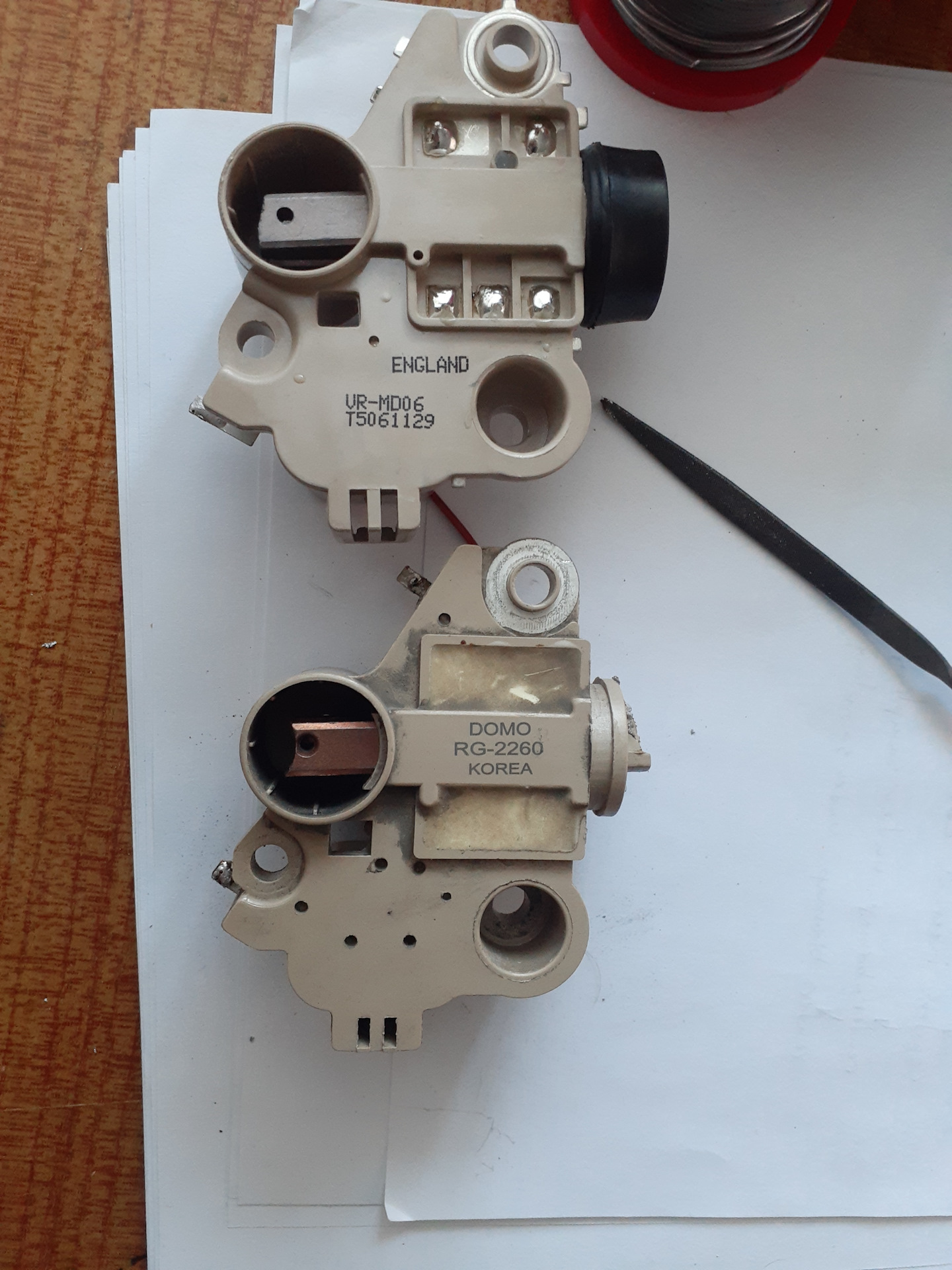 So, I was getting ready for work. I warmed up the car, did all that, and started driving. After a while, the fun began. The relay for the turn signals started clicking more quietly and at irregular intervals. Then the stereo cut out. I step on the gas, and if I push the pedal past a certain point, the car starts to lag/loses power. I didn't have a multimeter with me, so while driving I decided to check the voltage using the remote starter. It showed 9.8 volts))) I immediately turned around and headed home. I parked, and then I couldn't even start the car again. So yeah, that's the situation.
During my lunch break, I decided to go out, take out the battery, and charge it. Just in case, I grabbed a multimeter. Out of curiosity, I checked it, and the voltage was around 12.6 volts! I'm thinking, what's going on? I decided to start it—and it started! But then the voltage dropped to 9 volts. I turn on the high beams and hazard lights, the voltage drops to 7 volts, then to 6.7, and the engine starts misfiring. I turn off the electrical equipment, and the voltage goes back up to 9.
After some searching, the culprit was found—the voltage regulator. Unfortunately, I could only be sure once the new part arrived. Interestingly enough, the old one wasn't an original. I don't know how long it lasted before I got the car, but for me, it died two years after I bought it (30,000 km). The brushes are in good condition. The bearings are fine. I haven't decided yet whether to repack them with grease or not. I'm going to assemble the alternator back. For testing, I bought a cheap Vympel 57.
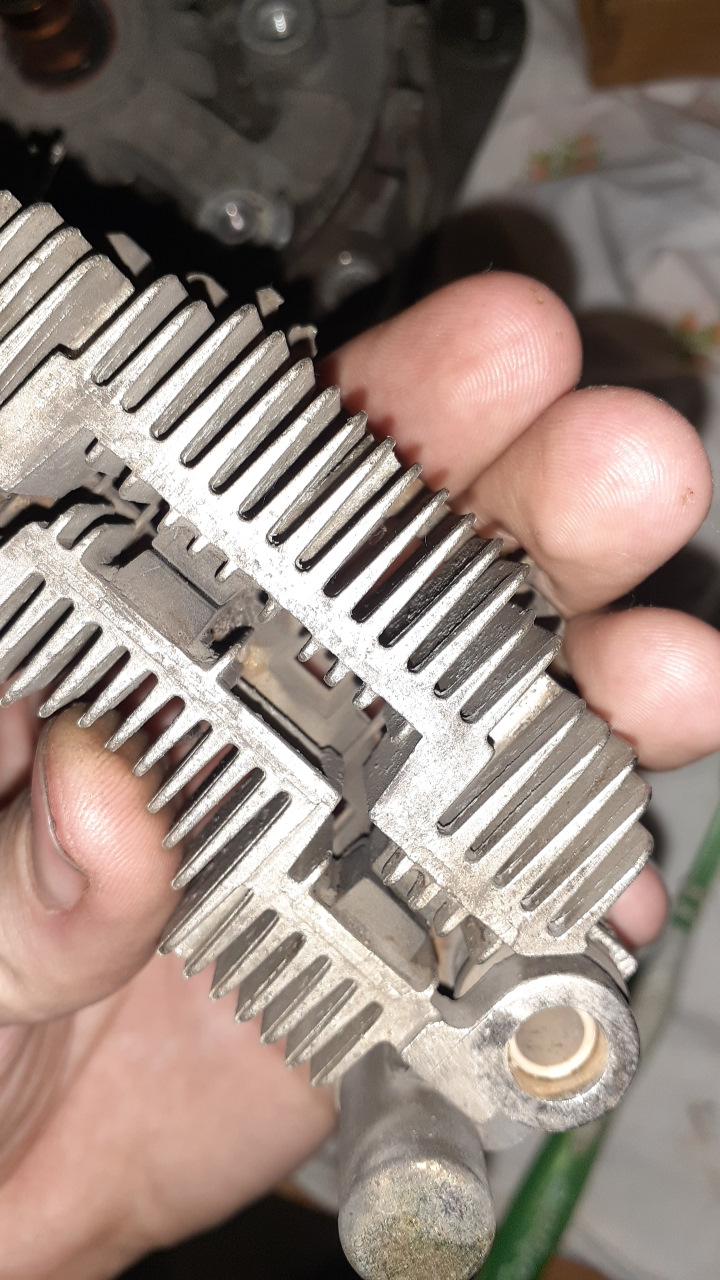
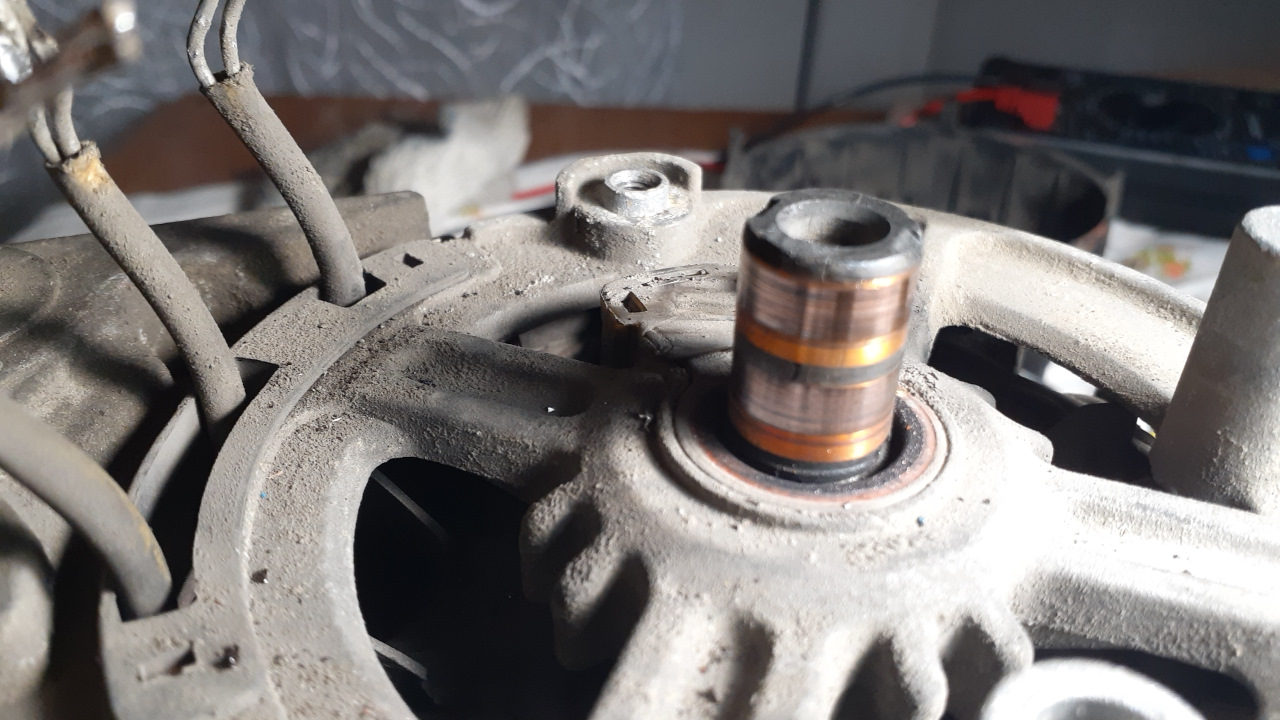
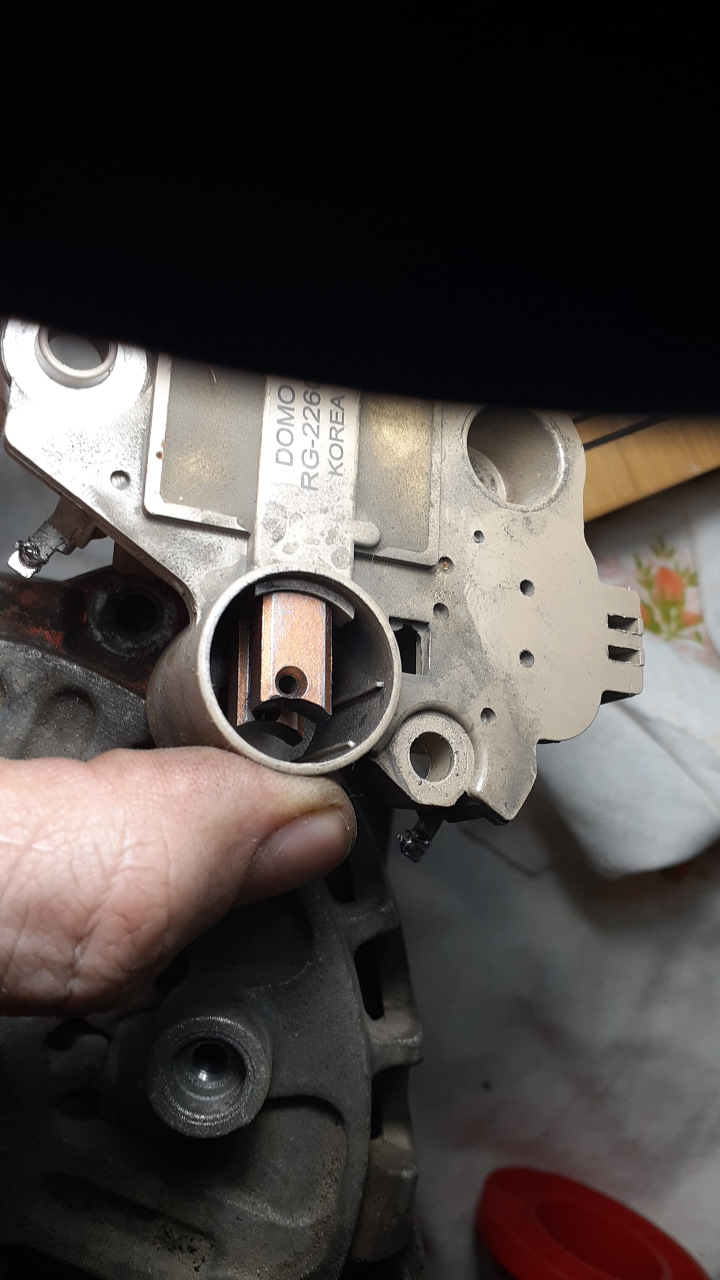
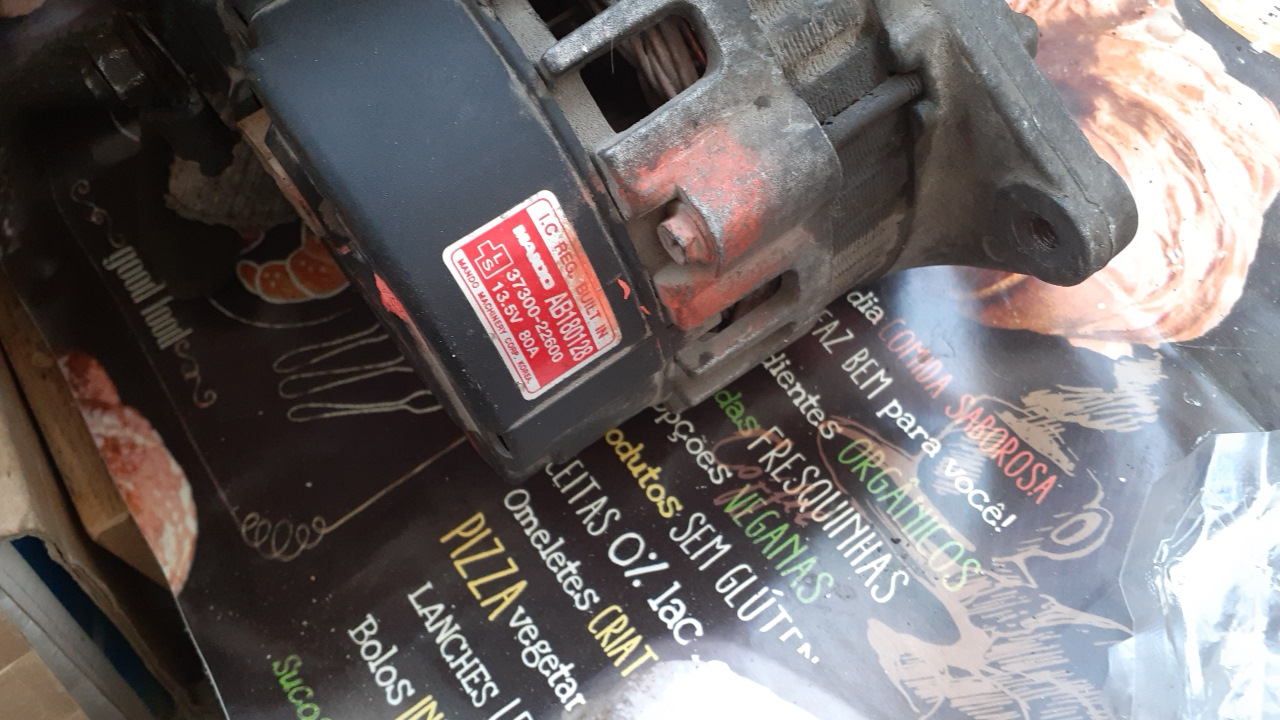 Next, I decided to take apart the old voltage regulator to figure out what caused the failure. I pried it open (I filed off the heatsink; the circuit board was glued to it). The contacts on the board were corroded. The negative contact going to the brush (the black wire in the pinout) was particularly badly affected. (Its terminal is also different; it's thinner than all the others.) I couldn't identify the components themselves on the board. If anyone has a schematic, please send it to me—it would be interesting to understand how it works. I suspect it uses a zener diode and transistors somehow, but I'm not sure. Anyway, I resoldered the contacts, tested it on a power supply, and voila, it all worked. I kept the board as a souvenir; it can just lie around. So, in summary, the negative contact corroded/broke off. I suspect this is a common failure on similar regulators.
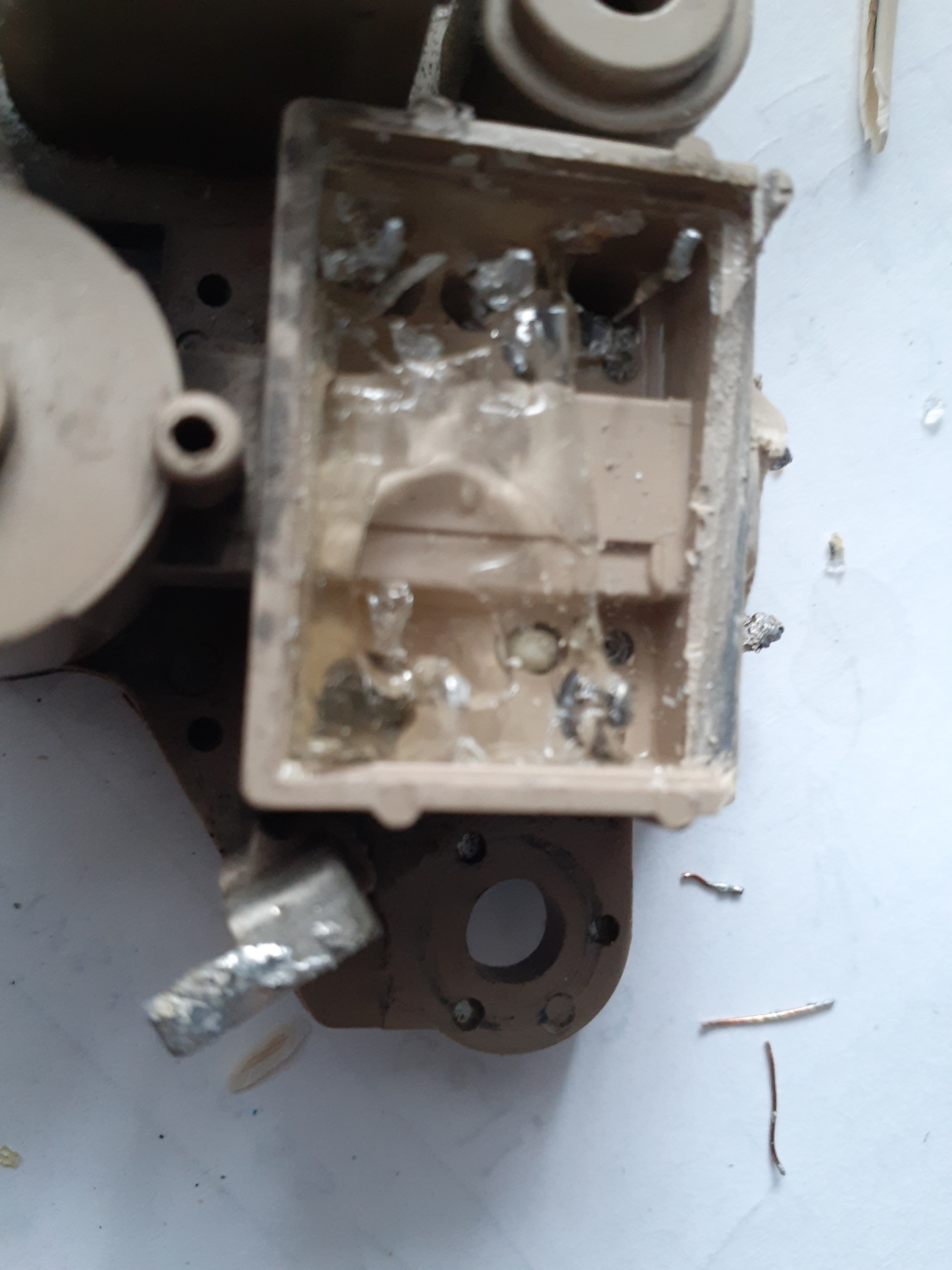
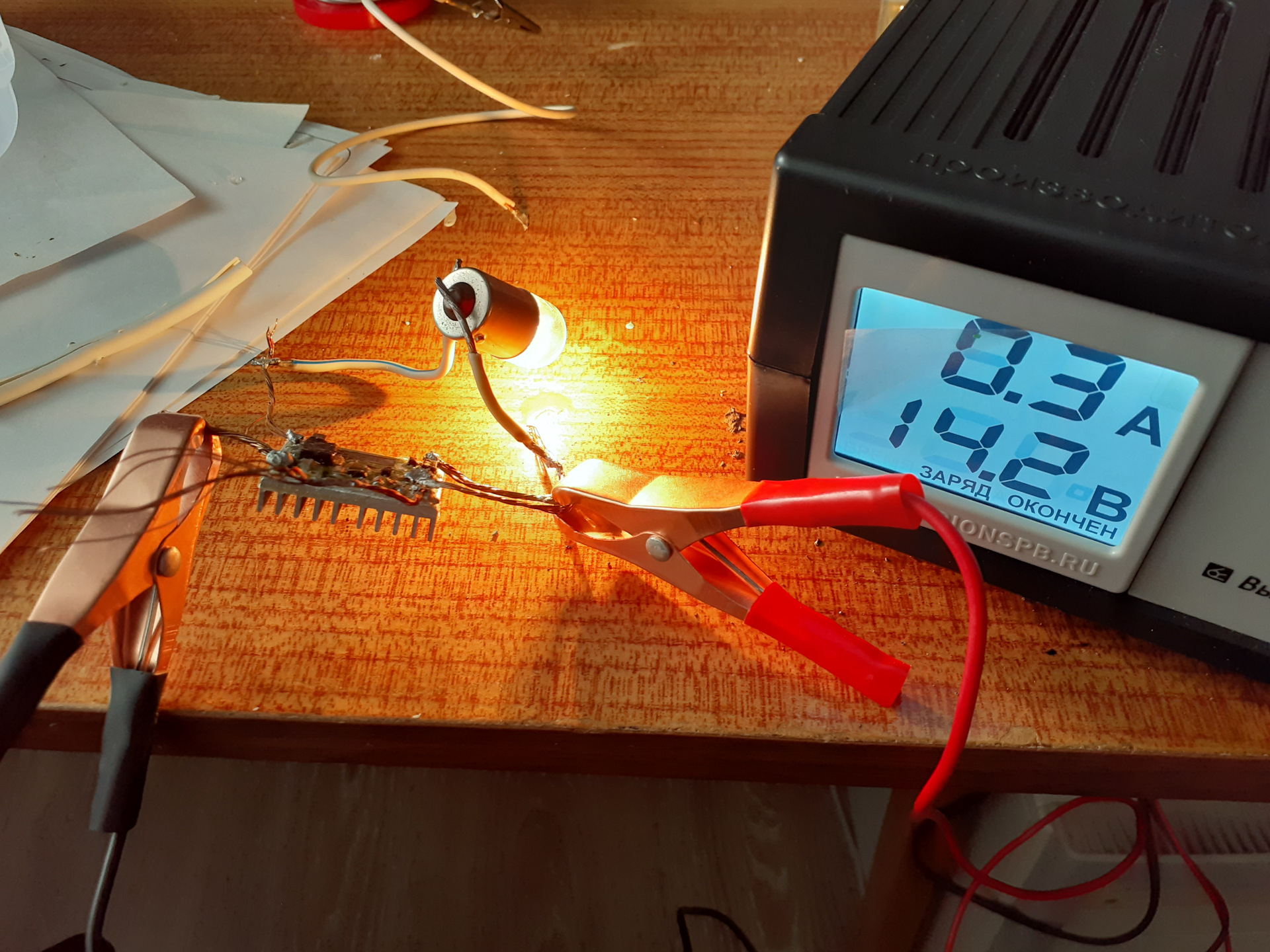
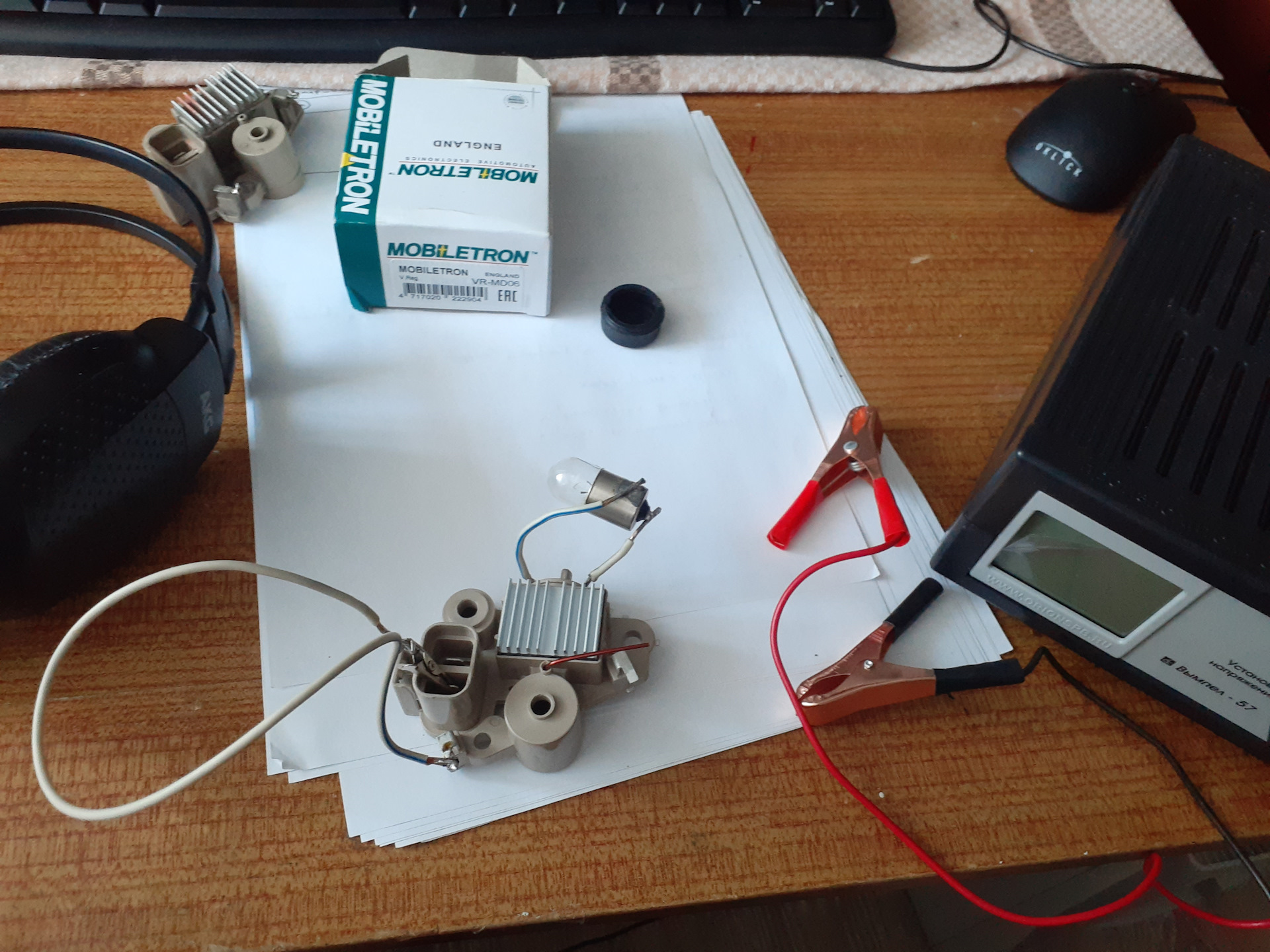
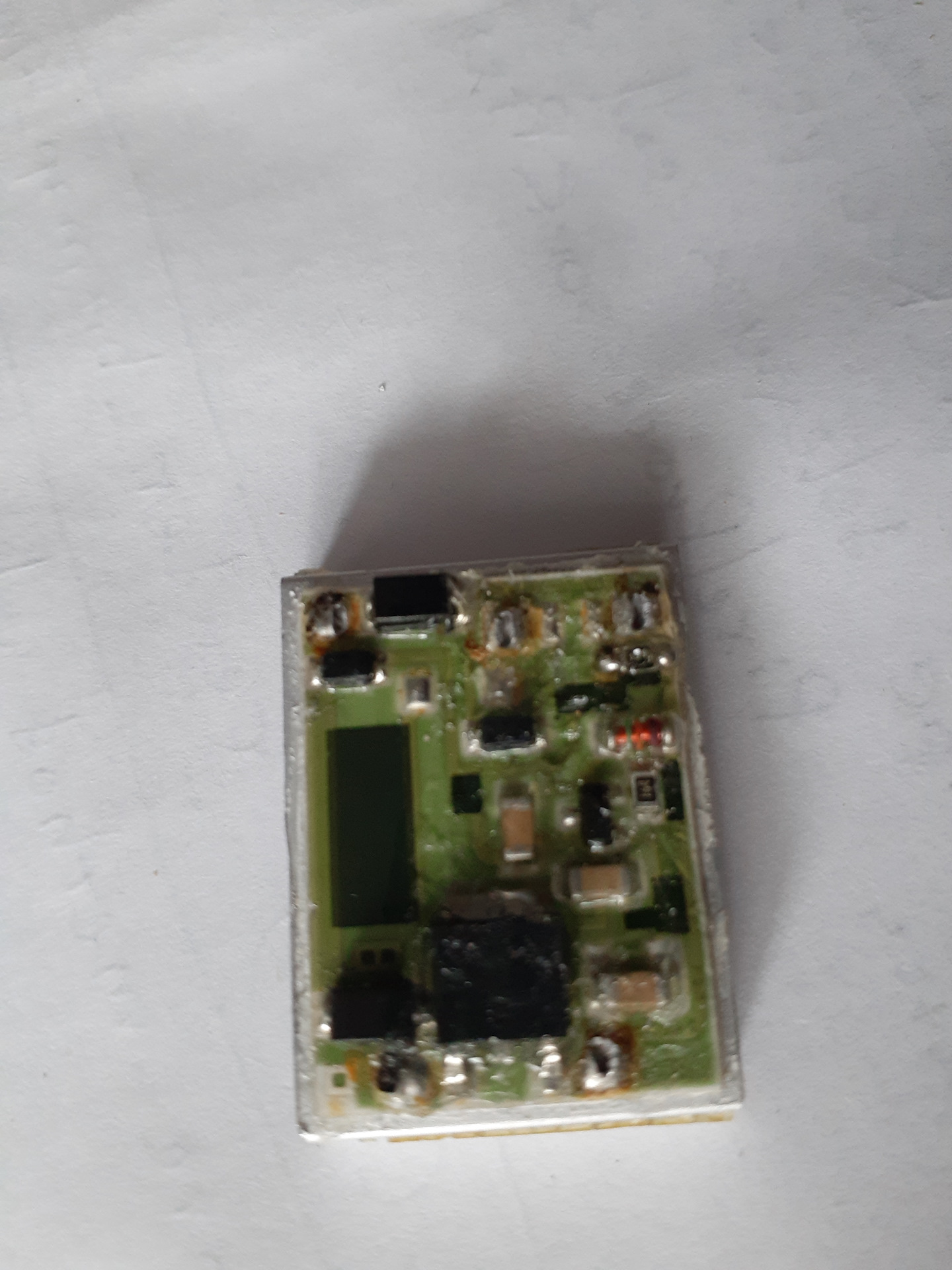
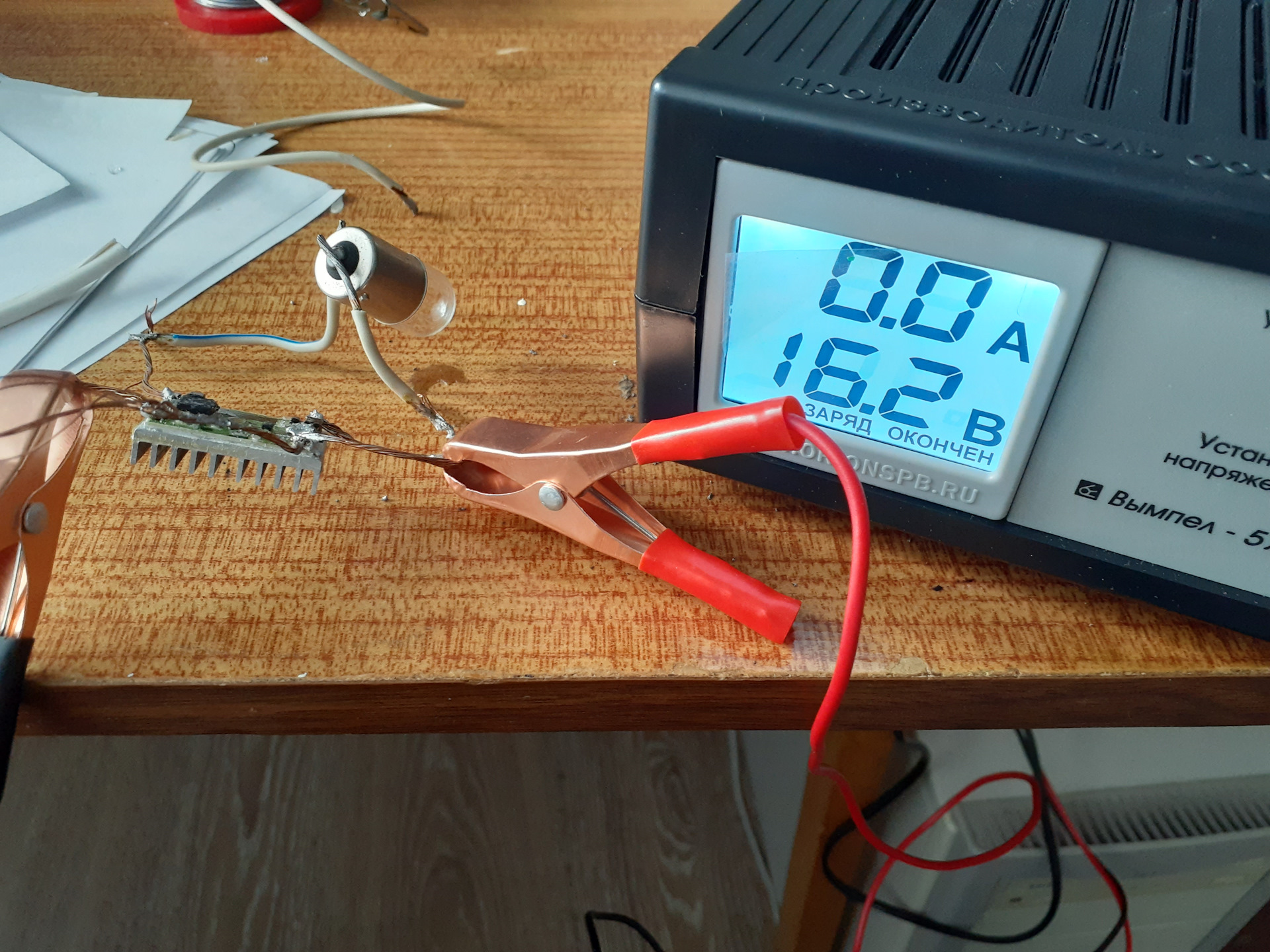
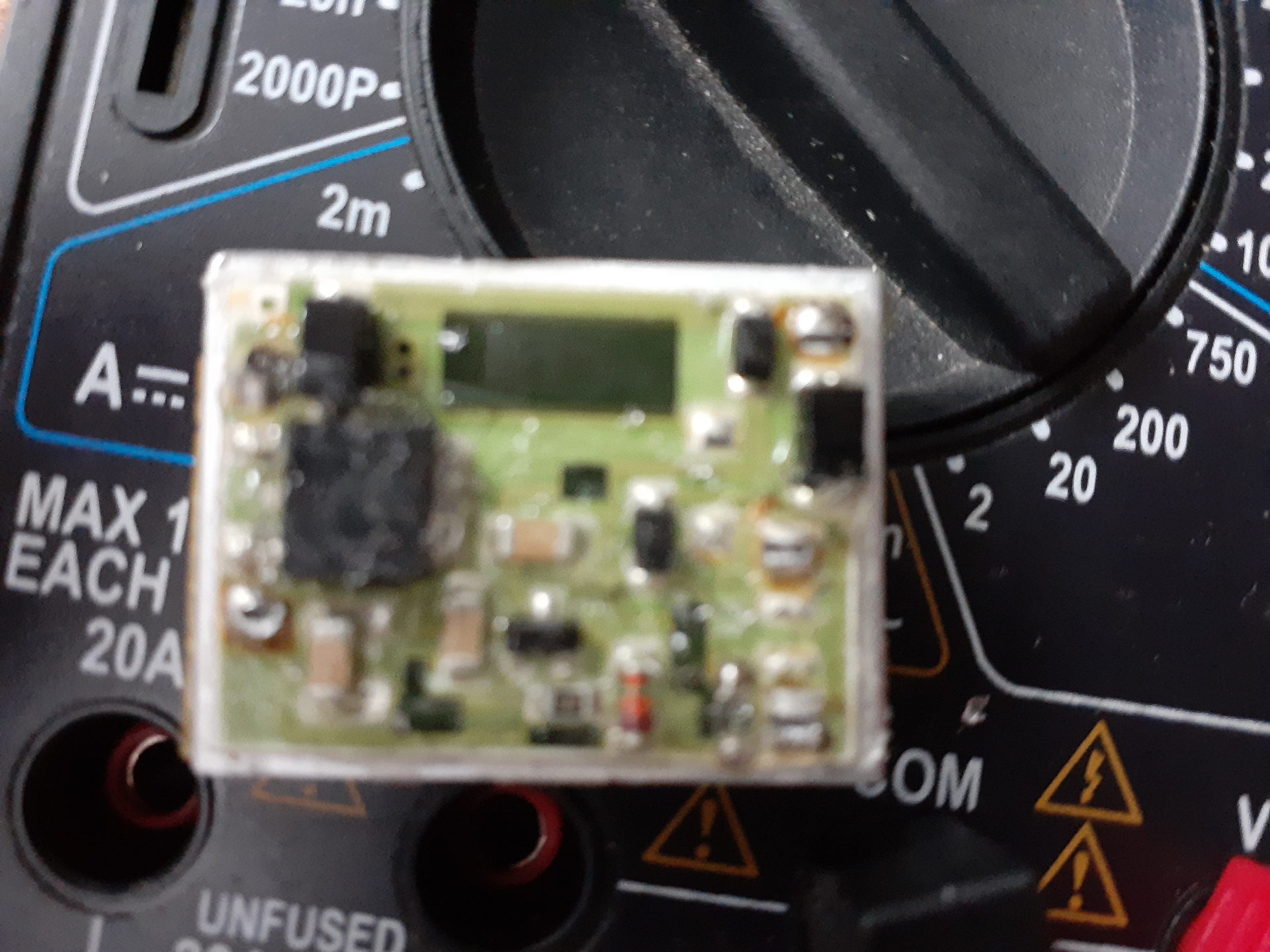
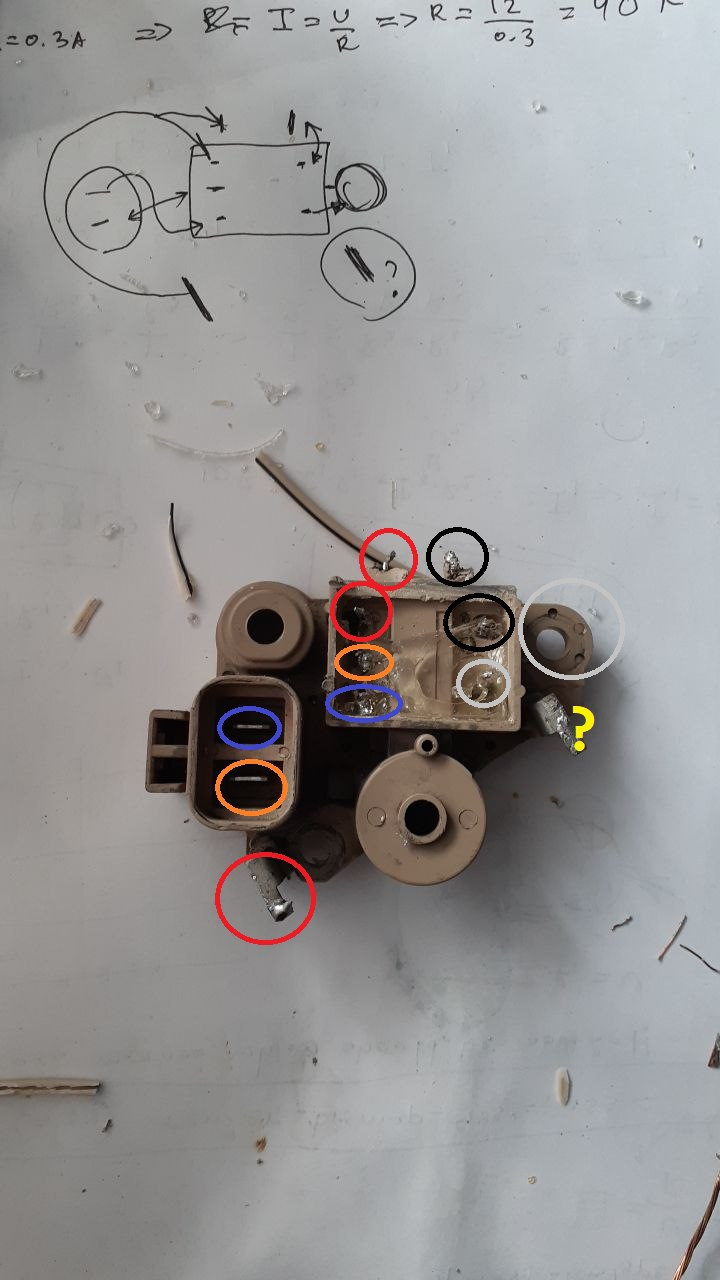
Next, I decided to take apart the old voltage regulator to figure out what caused the failure. I pried it open (I filed off the heatsink; the circuit board was glued to it). The contacts on the board were corroded. The negative contact going to the brush (the black wire in the pinout) was particularly badly affected. (Its terminal is also different; it's thinner than all the others.) I couldn't identify the components themselves on the board. If anyone has a schematic, please send it to me—it would be interesting to understand how it works. I suspect it uses a zener diode and transistors somehow, but I'm not sure. Anyway, I resoldered the contacts, tested it on a power supply, and voila, it all worked. I kept the board as a souvenir; it can just lie around. So, in summary, the negative contact corroded/broke off. I suspect this is a common failure on similar regulators.
About me
Hi! I am Alex, the author of this blog. Here are my technical (in the majority) thoughts and stories. I will be hoping that you find this site interesting and fun. Also you can feel free to contact me (support for comments will be added later).